
RIA Advocate Update 9.22.26
This update summarizes selected federal and state policy developments that may affect restoration businesses. I have included practical suggestions for members to consider in light of their own operations. This update provides general educational information as of September 22, 2026. It is not legal, insurance, or project-specific technical advice. Requirements depend on the facts, policy terms, exemptions, and applicable law. I suggest confirming current requirements with the responsible agency or qualified counsel before making business decisions.
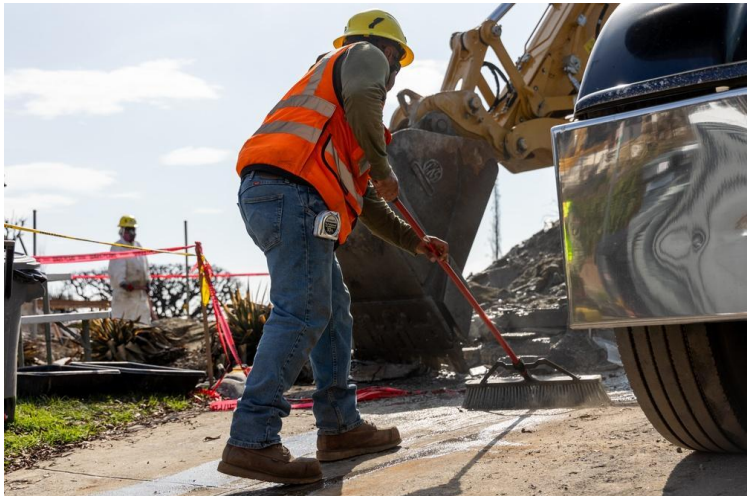
Wildfire debris cleanup in Pacific Palisades, California, March 1, 2025. Photo: Travis England / U.S. Army Corps of Engineers | Public domain The appearance of U.S. Department of War (DoW) visual information does not imply or constitute DoW endorsement. Reuse terms
Key Takeaways • California signed AB 1642 and AB 1795 into law on September 15, 2026. Together, they address wildfire contamination standards and residential smoke-damage insurance claims. • The California laws take effect January 1, 2027, with later agency deadlines in 2028 and 2029. I suggest reviewing their application to your work and claims with qualified advisers. • Massachusetts recorded a public-school procurement report. For public-sector work, I suggest checking purchasing authority, written scopes, change approvals, and invoice documentation. • Federal MOLD Act provisions in the Senate committee’s FY2027 NDAA remain proposed and could affect military-housing remediation standards and qualifications. • Montana’s contractor licensing requirements are in effect. I suggest confirming your company’s license status and any applicable exemptions before working or deploying there. General Contracting Military housing mold provisions in the FY2027 NDAA Section 2825 of the Senate Armed Services Committee’s FY2027 National Defense Authorization Act (S. 4784) contains provisions based on the Military Occupancy Living Defense (MOLD) Act. As of September 22, 2026, these provisions remain proposed and have not been enacted. They concern covered military family housing.
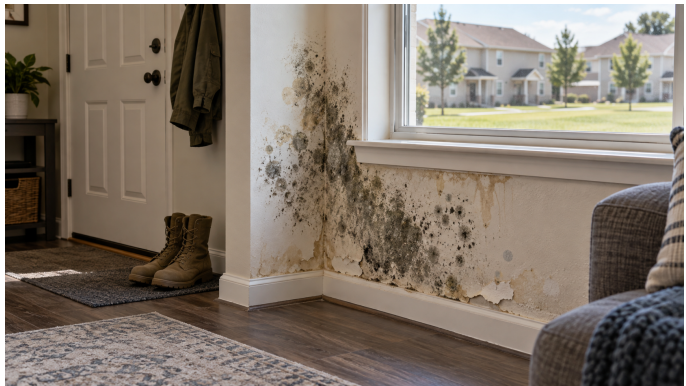
AI-generated illustration of mold and water damage in fictional military family housing. Not a photograph of an actual property.
The Senate text proposes moisture and environmental health standards, independent certified inspections in privatized military housing after specified complaints or remediation work, and professional certification requirements for personnel assessing or remediating mold and water damage in covered housing. It would also require mold remediation to follow ANSI/IICRC S520, Fourth Edition or a subsequent edition. Any new obligations, including which credentials satisfy them, depend on final legislation and implementation. My suggestion: Monitor the final bill and implementation guidance before purchasing training or making contractual commitments based on this proposal. For existing military-housing work, I suggest checking the requirements already applicable to your contracts and services. Senate NDAA section 2825 | Legislative status
Montana contractor licensing reminder Montana HB 239 changed the state’s construction-contractor system from registration to licensing, effective January 1, 2026. Montana DLI confirms that registrations active on December 31, 2025, were automatically converted to licenses. This is a reminder of an existing requirement for members working in Montana, including firms deploying after a disaster. Restoration activities involving repair, alteration, removal, or rebuilding may fall within the law. Montana Code 37-45-104 includes exemptions for certain wage employees, independent contractors without employees, and other specified situations. An exemption under this chapter does not by itself resolve separate workers’ compensation, Independent Contractor Exemption Certificate, or trade-license requirements. My suggestion: Confirm your company’s license status and applicable requirements with Montana DLI or qualified Montana counsel. I suggest reviewing worker classification, subcontractor credentials, employment practices, customer documents, and handling of customer funds. DLI identifies 30-day reporting requirements for certain business changes. Consider including these checks in your pre-deployment review. Montana DLI program and license lookup | Statutory exemptions Massachusetts public contracting report The Massachusetts legislative record identifies HD 5923 as a communication submitting an Office of the Inspector General report titled “Boston Public Schools – Procurements, Contracts and Payments.” It was placed on file September 14, 2026. This filing records the submission of a report; it does not itself enact contractor requirements. My suggestion: For public-sector jobs, I suggest confirming who can authorize the work, documenting the agreed scope and changes, and matching invoices to the correct contract and completed services. These are general business-practice suggestions. Massachusetts legislative record Restoration Insurance California AB 1795 and residential smoke-damage claims AB 1795, the Smoke Damage Recovery Act, was signed September 15, 2026, and takes effect January 1, 2027. For covered residential wildfire smoke-damage claims within a wildfire impact zone, it addresses necessary sampling and testing costs, subject to policy terms and statutory requirements, and the policyholder’s right to select a restoration contractor. For covered claims within the wildfire impact zone, the law restricts termination of additional living-expense coverage until the property is restored to preloss condition and cleared for occupancy, subject to the applicable policy limit. It also creates a rebuttable presumption connecting specified contamination in surviving residential properties within that zone to the wildfire. An insurer electing to inspect a covered smoke-damaged property must do so as soon as practicable and within the law’s 30-calendar-day limit, measured from claim notice or access granted after government restrictions. Separate 30-day payment deadlines have different triggers and exceptions. A contractor’s invoice date is not a universal payment trigger. My suggestion: Keep clear records of damage, testing, scope, completion, and clearance. I suggest confirming how the statute and policy apply to each claim, especially a claim involving an earlier loss, before relying on a payment deadline or coverage assumption. AB 1795 enacted text
Disaster Response
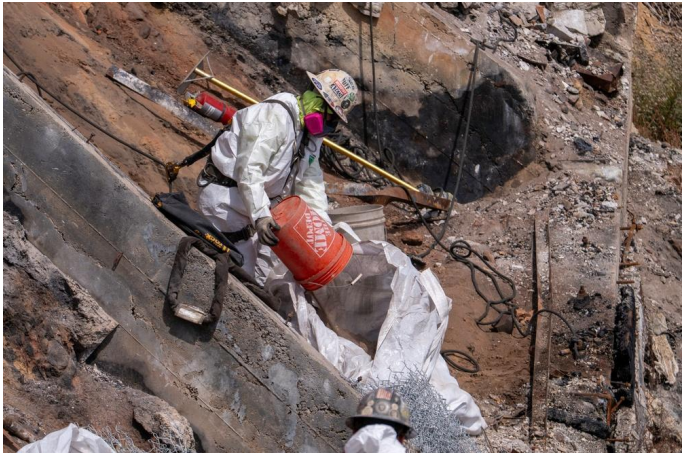
A crew member in protective equipment clears wildfire debris in Pacific Palisades, California, July 2025. Photo: Charles Delano / U.S. Army Corps of Engineers | Public domain The appearance of U.S. Department of War (DoW) visual information does not imply or constitute DoW endorsement. Reuse terms
California AB 1642 and wildfire cleanup standards AB 1642 was signed September 15, 2026, and takes effect January 1, 2027. It establishes a framework for wildfire contamination testing, remediation, and restoration. Its agency deadlines include: • July 1, 2028: Advisory guidance for schools recovering from wildfires. • December 31, 2028: Department of Toxic Substances Control regulations for lead and asbestos, plus State Air Resources Board guidance on indoor air contaminants. • December 31, 2029: Guidance for other specified wildfire contaminants, including additional heavy metals and combustion byproducts. The legislation also references existing federal and state lead and asbestos standards for specified occupancy-clearance purposes while new regulations and guidance are developed. My suggestion: Review the enacted text and agency guidance with qualified environmental professionals when planning testing, cleanup, and clearance. I suggest monitoring agency updates as the requirements develop. AB 1642 enacted text California AB 1795 and future workforce requirements AB 1795 directs the Department of Insurance to develop specified insurance-adjuster and public-adjuster training and certification programs by July 1, 2029. By the same date, Cal/OSHA must propose worker-protection regulations that include certification requirements for covered residential wildfire work. The worker rules require consideration and possible adoption by the Standards Board. I suggest checking adopted requirements before assuming that a particular credential will satisfy any new obligation.
Stay Connected & Support Advocacy Follow us on social media to stay engaged with the latest updates and advocacy wins. Ready to get involved or support the mission? Email vscarfo@restorationindustry.org to learn how you can participate and support RIA’s advocacy efforts. Share a specific example of how testing, payment, or public contracting requirements affect your business and the customers you serve. These updates are part of RIA’s mission to educate, advocate, and elevate the restoration industry—empowering contractors to navigate legislative challenges and shape a stronger future for a